
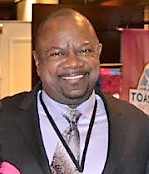
When I had been in Toastmasters for a few years, I had the opportunity to co-chair with our dynamic Spring Conference Chair Vicki Taylor, DTM. We worked with Parren Shannon, Region 7 Advisor, Past District Governor, who was then the Club Growth Director.
He carried an enormous scale of responsibility personal, professional and as a leader in Toastmasters. Yet, whenever I talked with him, he gave me his undivided attention. I noticed that he did that often with those around him.
He talked with me about my goals and my development opportunities. He shared stories about life (both his and mine) outside of being a Toastmaster. No matter how short the conversation, Parren would inject a personal remark or comment while frequently directing me to do something.
Parren Shannon excels in one of the most important — and most misunderstood — leadership skills: making an emotional connection.
Leadership has everything to do with how you relate to others and the quality and texture of those relationships. The higher up you go in an organization, the less important your technical skills become and the more your interpersonal skills matter.
The ability to make an emotional connection is so often misunderstood because it’s not about being emotional or showing emotion. It’s about making a human connection — one person to another. Parren connects on that level with me, with teams, or with an entire District of over 4,000 Toastmasters. He shows us how important we are to him. There is more to his relationship with us than just the job at hand.
Parren set the example we can all follow to forge these kinds of connections.
1. Give people your undivided attention. This sounds simple but in this ADHD world we live in it is harder than most think. When I feel overloaded amid ringing phones, e-mails by the hundreds and a gazillion other Toastmaster things to do, I sometimes think, “What would Parren do?”. That undivided attention he uses to focus on the person in front of him engages people and creates positive energy. He made us want to do more because we didn’t want to let him down.
2. Be aware that emotions are contagious. Research shows that a person’s mood can affect others, even by three degrees of separation…even people they don’t even know. Imagine your emotional impact in the workplace, with your family or at a Toastmasters meeting. Whether positive or negative, your emotional state has a significant influence on those you are around especially when you are the leader.
Granted, we all have our bad days, but we don’t have to multiply their ill effects. If you’re feeling particularly anxious or negative, try to quarantine yourself — do more of your administrative tasks, avoid situations that might trigger even more stress or take the afternoon off (you may do more harm than good by staying on the job). Better yet, there are techniques to get yourself out of a bad mood, like laughter, a calming walk outside, or talking on the phone with a love one.
When you’re feeling up, try to spend more time with people or reach out to others in Toastmasters. Use this time to your advantage and to others by multiplying your positive emotions.
3. Become an extrovert. I am by nature an introvert. Most don’t believe me, but it is true. I have learned over many years of practice to put myself out there. Make no mistake, this is easier said than done. But if you’re a leader, you simply must develop the ability to reach out to others, engage them in discussion and actively provide feedback. You’re the one who should be out in front to take the lead in developing these relationships. Even introverts can muster the energy to do these things and relate to others. And then, when you’re exhausted from it, you can do what I do, sit quietly with a book.
As leaders, by definition, we do our work through other people. Yet it is so easy to lose sight of that and to focus on the amount of work — the tasks, the output, the jobs to be completed. The irony is the more you focus on quality connections, the greater your quantity of output is likely to be.
Author: Michelle Hanchey, DTM (x2) – Public Relations Manager-District 44